Introduction
Hair transplant procedures have evolved dramatically in recent years. They are no longer just a simple cosmetic procedure; today they represent a precise science that combines medicine, surgery, aesthetics, and facial design planning.
One of the most common questions patients ask is:
Should I choose FUE or DHI for my hair transplant? Which technique provides better density and more natural results?
In reality, much of the information circulating online can be misleading. Many clinics promote one technique as the absolute best, while the medical truth is:
There is no technique that is always better — there is only the technique that is best for your specific case.
In this guide, we will explain the real scientific and practical differences between FUE and DHI hair transplant techniques, helping you make the right decision based on facts rather than marketing claims.
What Is FUE Hair Transplant? (Follicular Unit Extraction)
FUE (Follicular Unit Extraction) is currently the most widely used hair transplant technique worldwide.
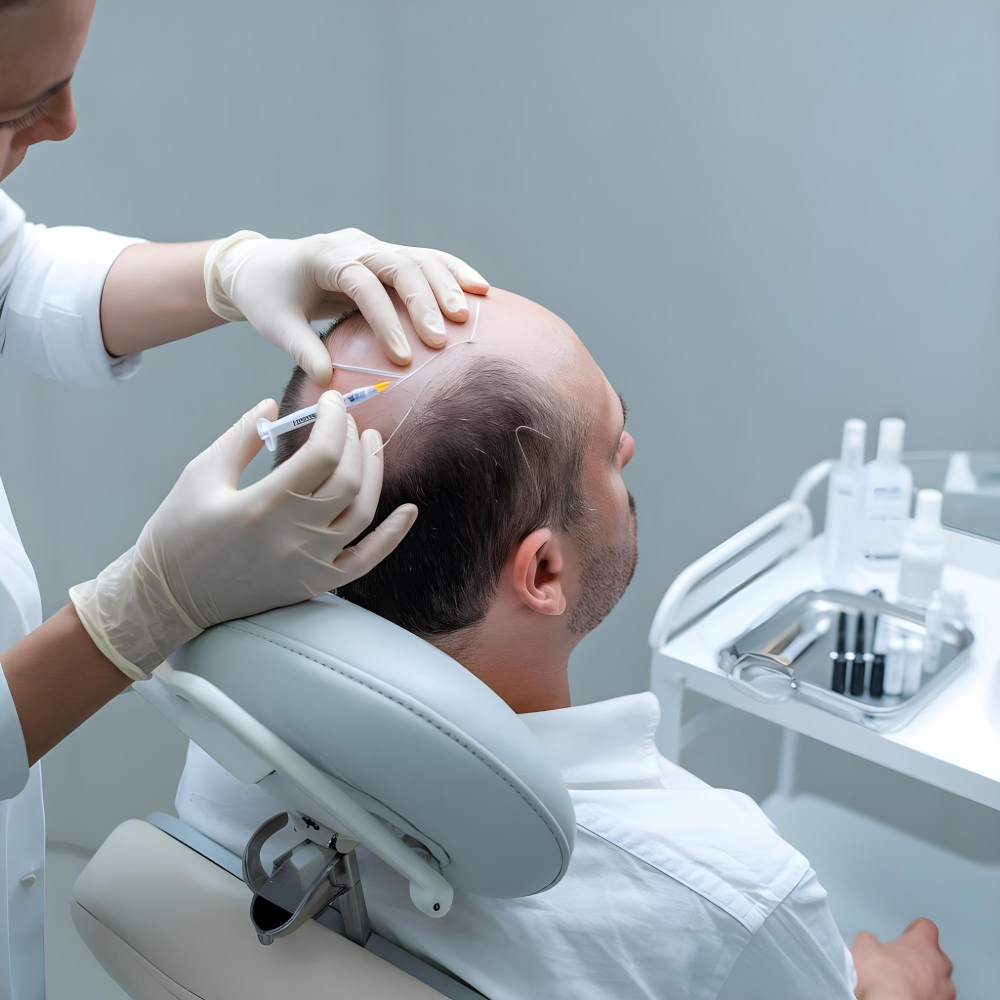
In this method, hair follicles are extracted one by one from the donor area (usually the back of the head), then tiny channels are created in the recipient area where the follicles are implanted.
Procedure Steps
Shaving the donor area
Extracting follicles using Micro Punch tools
Creating channels in the recipient area
Implanting the follicles
Advantages of FUE
Suitable for large bald areas
Produces natural hair distribution
Faster for large transplant sessions
Generally more affordable
Ideal for advanced stages of hair loss
Disadvantages of FUE
Slightly less control over hair angle compared to DHI
Slightly lower density in delicate frontal areas
Requires high skill when designing the hairline
What Is DHI Hair Transplant? (Direct Hair Implantation)
DHI (Direct Hair Implantation) is an advanced development of the FUE technique.
In this method, the follicle is implanted directly using a special tool called the Choi Implanter Pen, without the need to create channels beforehand.
This means that:
The channel is created and the follicle is implanted at the same time.
Procedure Steps
Extracting hair follicles
Loading them into the Choi Implanter Pen
Direct implantation into the scalp
Advantages of DHI
Allows higher hair density
Excellent control over angle and direction
Ideal for hairline, beard, and eyebrow transplants
Less bleeding
Faster recovery
Sometimes possible without full shaving
Disadvantages of DHI
Procedure takes longer
Higher cost
Not ideal for very large bald areas
FUE vs DHI Hair Transplant: Direct Comparison
| Factor | FUE | DHI |
|---|---|---|
| Hair Density | Good | Very High |
| Procedure Time | Faster | Longer |
| Cost | Lower | Higher |
| Recovery | Good | Faster |
| Angle Control | Moderate | Very Precise |
| Large Bald Areas | Yes | Limited |
| Hairline Design | Good | Excellent |
| Hair Shaving | Usually full | Sometimes partial |
When Should You Choose FUE or DHI?
Choose FUE if:
You have large areas of hair loss
You need a large number of grafts
You want one large transplant session
Your budget is limited
Choose DHI if:
You want a perfect hairline design
Your hair loss is mild to moderate
You want maximum density
You want highly precise aesthetic results
Hair Transplant Results: The Truth Most Clinics Don’t Tell You
The final result of a hair transplant depends less on the technique and more on other factors, including:
The surgeon’s experience
Hairline design
Graft distribution
Protection of the donor area
Proper post-operative care
In other words:
Same technique + different surgeon = completely different results.
This is why experienced patients today focus on choosing the clinic first, not the technique.
Why Turkey Is the World’s Leading Destination for Hair Transplants
Turkey has become the global hub for hair transplant procedures, thanks to:
Surgeons specialized exclusively in hair transplantation
Thousands of procedures annually
Access to the latest medical technologies
Costs 60–70% lower than Europe
Extensive clinical experience
In Istanbul, many centers specialize solely in hair transplantation rather than general cosmetic procedures, which significantly improves results.
One notable example is Hair Transplantation in Turkey Clinic, where the technique is chosen based on professional scalp analysis rather than marketing trends. In some cases, doctors may recommend FUE, DHI, or even a Hybrid Technique combining both methods to achieve optimal density.
Important Tips Before Choosing a Hair Transplant Technique
Never choose a technique before a medical consultation
Do not rely only on before-and-after photos
Ask about donor area preservation
Check how many procedures the doctor performs daily
Don’t be misled by the term “latest technology” — the most important thing is the right technique for your case
Conclusion
FUE and DHI hair transplant techniques are not competitors — they complement each other.
FUE = the engineering solution for large bald areas
DHI = the artistic solution for density and detail
Today, the best results worldwide often come from a smart combination of both techniques, tailored to each patient’s condition rather than using a single method for everyone.
If you want results that look completely natural and indistinguishable from your original hair, the most important question is not:
“Which technique should I choose?”
But rather:
“Which surgeon will design my hair for the rest of my life?”