Introduction
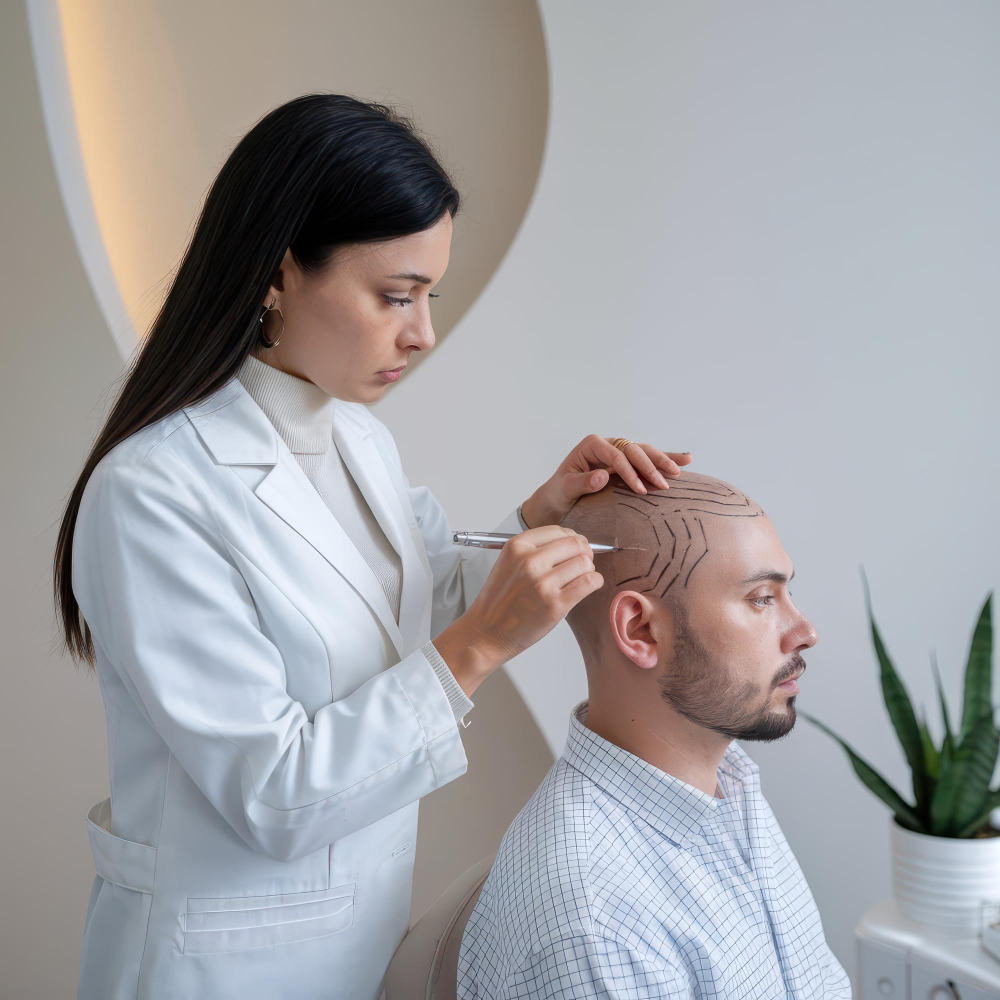
The graft distribution strategy is the decisive factor in achieving a successful hair transplant and obtaining natural density that is indistinguishable from original hair. Many patients believe that the total number of transplanted grafts is the only key to a perfect result. However, the truth is that the graft distribution pattern, implantation angle and direction, and natural hairline design are far more important.
In this comprehensive guide, you will learn how hair grafts are scientifically distributed to ensure natural density, the difference between random implantation and professional planning, and why choosing a leading hair transplant clinic in Istanbul, Turkey makes all the difference for realistic, long-lasting results.
What Does Graft Distribution Mean in Hair Transplantation?
Hair graft distribution refers to the medical and architectural plan used by the surgeon to determine:
The number of grafts placed per cm²
The angle and direction of each graft
Density balance between the frontal area and the crown
Natural hairline design
The combination of single, double, and multi-hair grafts
Any mistake in these factors may lead to:
An artificial appearance
Uneven density
A straight, unnatural hairline
Visible gaps under lighting
In other words, distribution matters more than numbers.
Scientific Standards for Achieving Natural Density
1️⃣ Natural Hairline Design
The frontal hairline is the most critical aesthetic element.
It must be designed according to:
Patient’s age
Facial proportions
Donor area density
Future hair loss pattern
⚠️ A straight or excessively low hairline creates an artificial look.
Advanced clinics in Istanbul use 3D digital simulation to design a hairline that harmonizes with facial features.
2️⃣ Calculated Density per cm²
Natural hair density ranges between:
80–100 hairs per cm² in a non-balding individual
In professional transplantation:
35–55 grafts per cm² are strategically implanted
The Dense Packing technique allows high-density placement without compromising scalp blood supply.
3️⃣ Graft Type Distribution
Each graft may contain:
1 hair (for the hairline)
2 hairs
3–4 hairs (for posterior density)
In professional planning:
Hairline = single-hair grafts only
Mid-scalp = double grafts
Crown = triple or quadruple grafts
This gradual transition creates 100% natural results.
4️⃣ Angle and Direction of Implantation
Natural hair does not grow at a 90° angle.
It typically grows at 30–45°, depending on the area.
An experienced surgeon considers:
Original growth direction
Hair curvature
Directional differences on each side of the scalp
Even a small error in angle can make the transplant look obvious.
Traditional vs Advanced Hair Transplant
| Comparison Factor | Traditional Method | Advanced Professional Method |
|---|---|---|
| Graft Distribution | Semi-random | Architecturally planned |
| Hairline | Straight | Natural irregular pattern |
| Density | Uniform | Gradual transition |
| Tools | Conventional manual tools | DHI Choi pens & micro-implanters |
| Result | Acceptable | 100% natural |
Modern Technologies for Ideal Graft Distribution
Advanced FUE Technique
Individual graft extraction with full control over angle and density.
DHI (Direct Hair Implantation)
Choi pens allow precise control of:
Implant depth
Direction
Density
Minimal bleeding
Digital Scalp Analysis
Leading clinics in Istanbul use:
Digital density analysis
3D planning systems
Pre-surgery simulation
This ensures predictable, customized results.
Why Is Istanbul Considered the Global Capital of Hair Transplant?
Istanbul is internationally recognized as a leading destination for hair restoration.
Top hair transplant clinics in Istanbul offer:
Thousands of successful procedures
Advanced FUE & DHI techniques
Personalized hairline design
Scientifically planned graft distribution
Dedicated medical teams (not technicians only)
Long-term post-operative follow-up
Modern protocols focus on:
Donor area preservation
Future density planning
Avoiding donor overharvesting
The goal is not just immediate results — but sustainable natural density for years.
How Many Grafts Are Needed for Ideal Density?
This depends on:
Norwood Scale stage
Bald area size
Hair thickness
Contrast between hair and skin color
On average:
2,500 – 4,500 grafts in most cases
But again — distribution matters more than quantity.
Common Mistakes in Graft Distribution
❌ Overpacking without considering blood supply
❌ Using multi-hair grafts in the hairline
❌ Ignoring future hair loss progression
❌ Depleting the donor area
❌ Creating a hairline that does not match age
These errors compromise natural results.
When Does Final Density Appear?
Month 3–4: Early growth phase
Month 6: Around 60% visible result
Month 9–12: Final density
The final outcome depends on:
Surgeon expertise
Graft distribution strategy
Graft quality
Patient adherence to post-op instructions
Advantages of Choosing a Hair Transplant Clinic in Istanbul
✔ Free consultation and detailed analysis
✔ Personalized graft distribution plan
✔ Written medical guarantee
✔ Affordable cost compared to Europe
✔ VIP accommodation & transportation for international patients
✔ Latest global technologies
Conclusion
The secret to achieving natural hair after transplantation is not the number of grafts alone — it is the scientific distribution strategy that mimics natural hair growth patterns.
Architectural planning, hairline design, density transition, and implantation angle determine the difference between an average result and a remarkable one.
If you are seeking realistic, long-lasting density with advanced techniques and professional graft planning, choosing a leading hair transplant clinic in Istanbul, Turkey is the smartest step toward restoring your confidence.
Natural results begin with intelligent planning — not just graft numbers.