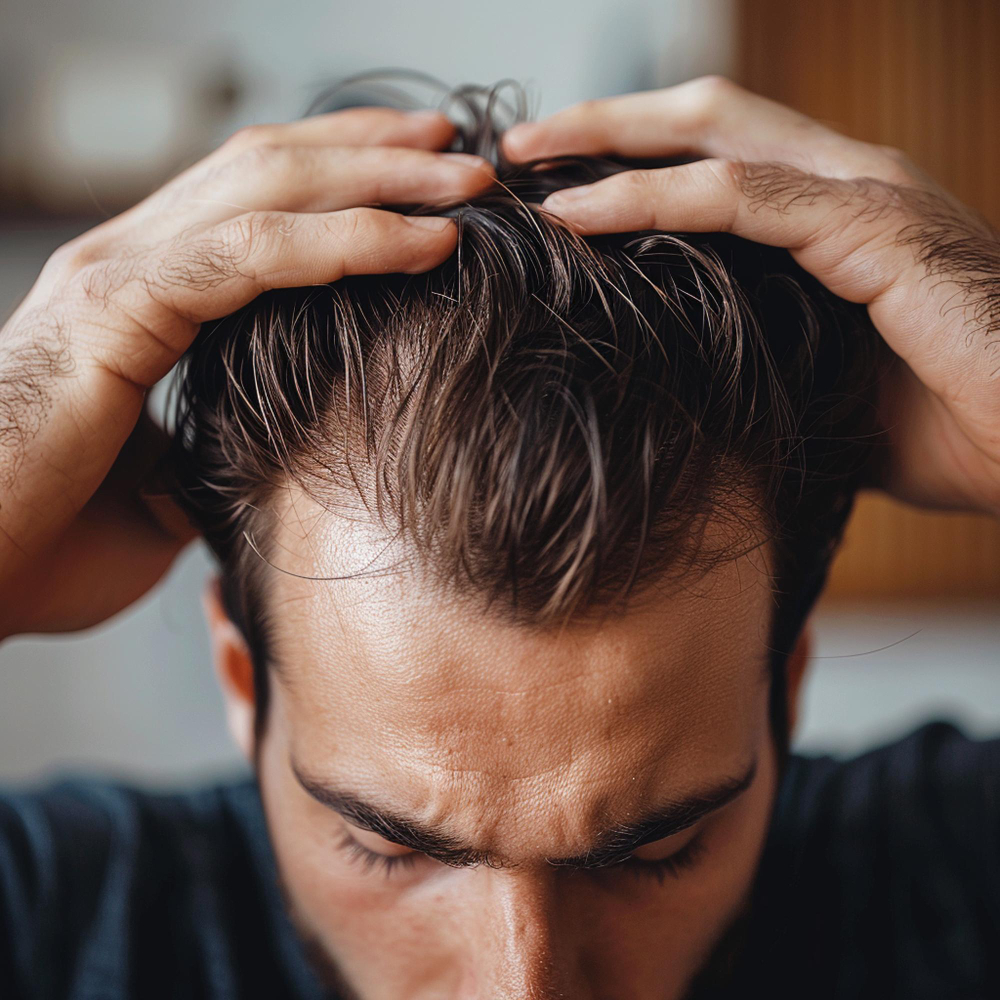
Does a Hair Transplant Last a Lifetime? Complete Permanence Guide
Hair transplanted from a stable donor area is generally considered permanent because the follicles usually retain their natural resistance to androgenetic hair loss after being moved to the hairline, frontal scalp, mid-scalp, or crown.
Is Hair Transplantation a Permanent Solution?
Patients considering hair restoration frequently ask whether transplanted hair remains for life, whether it can fall out after several years, and whether another operation may eventually become necessary.
In most suitable patients, healthy follicles taken from the permanent donor zone continue growing for decades and may remain for life. This is because the follicles usually preserve the biological characteristics of the area from which they were extracted.
However, the permanence of transplanted follicles does not prevent the patient’s original, non-transplanted hair from continuing to thin. Long-term success therefore depends on donor selection, surgical planning, future hair-loss progression, and preservation of the surrounding natural hair.
At Hair-Transplantation-In-Turkey in Istanbul, each patient receives an individual assessment of the donor area, hair-loss pattern, scalp condition, facial proportions, and likely future progression before the treatment plan is created.
How Does a Hair Transplant Work?
Hair transplantation relocates healthy follicular units from an area with stable hair growth to a region affected by thinning or baldness.
The donor area is usually located at the back and sides of the scalp. Hair in these areas is generally less sensitive to dihydrotestosterone, commonly known as DHT.
During treatment:
- Healthy follicular units are identified in the donor area.
- The grafts are extracted individually using an appropriate technique.
- They are carefully preserved outside the scalp.
- The recipient area is planned according to the natural growth pattern.
- The grafts are implanted at controlled depths, directions, and angles.
- The follicles establish a new blood supply during healing.
- New hair begins growing after the resting phase.
Why Is Transplanted Hair Usually Permanent?
The long-term behaviour of transplanted hair is primarily determined by the genetics of the follicle rather than its new location.
Follicles taken from a stable donor zone generally retain their resistance to pattern hair loss after transplantation.
Genetic Resistance
Donor follicles are usually less sensitive to the hormonal process responsible for androgenetic alopecia.
Characteristics Remain
The transplanted follicle normally keeps the biological characteristics of its original donor location.
Long-Term Growth
Successfully transplanted follicles may continue producing hair for decades and frequently for life.
Does Transplanted Hair Fall Out After Surgery?
Yes, the visible transplanted hair shafts commonly fall out during the early recovery period. This does not normally mean that the follicles have failed.
Temporary postoperative shedding is often called shock loss.
During this stage:
- The visible hair shafts shed.
- The follicles remain beneath the scalp.
- The follicles temporarily enter a resting phase.
- New hair begins growing several months later.
Hair Transplant Growth Timeline
| Time After Surgery | What Usually Happens |
|---|---|
| First 7–14 days | The scalp heals, scabs form, and the grafts become progressively secure. |
| Weeks 2–8 | Temporary shedding or shock loss commonly occurs. |
| Months 2–3 | The follicles remain in a resting phase beneath the scalp. |
| Months 3–4 | Fine new hairs begin emerging. |
| Months 5–6 | Growth becomes more noticeable and early density begins developing. |
| Months 7–9 | Hair becomes thicker, longer, and more visible. |
| Months 10–12 | Most frontal results become clearly established. |
| Months 12–18 | Late maturation may continue, particularly in the crown. |
Can Transplanted Hair Fall Out Years Later?
Successfully transplanted follicles usually remain stable for many years. However, several situations can change the appearance of the result over time.
In many cases, the transplanted hair remains while the surrounding native hair continues thinning.
This can create:
- New thinning behind the transplanted hairline.
- Reduced density in the mid-scalp.
- Progressive crown baldness.
- A visible separation between transplanted and native hair.
- The need for additional treatment or another transplant.
What Factors Affect How Long a Hair Transplant Lasts?
Donor Area Quality
Strong, stable follicles from the safe donor zone are more likely to provide long-term growth.
Correct Donor Selection
Follicles extracted from unstable or thinning zones may not provide lifelong resistance.
Surgical Experience
Careful extraction, preservation, and implantation help improve graft survival.
Hairline Planning
An age-appropriate hairline remains more natural as the patient grows older.
Future Hair Loss
Continued thinning of native hair can affect the appearance even when transplanted follicles remain stable.
Postoperative Care
Correct washing, medication use, and graft protection support early survival.
Scalp Health
Inflammatory or scarring scalp conditions may influence long-term hair growth.
Smoking and General Health
Factors that affect blood circulation and healing may influence the result.
Donor Preservation
Conservative graft management protects the scalp and preserves options for future restoration.
Which Hair Transplant Technique Provides Permanent Results?
FUE, Sapphire FUE, and DHI may all provide long-lasting results when the follicles are selected from a stable donor area and the procedure is planned correctly.
| Technique | Main Characteristics | Long-Term Result |
|---|---|---|
| FUE | Individual follicular-unit extraction with planned channel creation and graft placement | Can provide permanent growth when suitable grafts survive |
| Sapphire FUE | FUE procedure with recipient channels commonly created using sapphire blades | Permanence depends on follicle quality and survival, not the blade material alone |
| DHI | Extracted grafts are placed using an implanter device | Can produce permanent results when donor selection and implantation are appropriate |
Do You Need Minoxidil or Finasteride After a Hair Transplant?
Transplanted follicles do not usually depend on hair-loss medication to remain alive when they are taken from a stable donor area.
However, medication may be recommended to protect the patient’s original non-transplanted hair.
Depending on medical suitability, supportive options may include:
- Topical or oral Minoxidil.
- Finasteride for suitable male patients.
- Other medically approved treatments.
- PRP as a supportive procedure in selected cases.
- Treatment of scalp inflammation or nutritional deficiencies.
Will You Need a Second Hair Transplant?
Many patients achieve their main objective with one procedure. Others may later benefit from another session.
A second transplant may be considered when:
- The original bald area was extensive.
- The first procedure intentionally prioritised the hairline.
- The crown was left for a later session.
- The patient wants additional density.
- Native hair continues thinning.
- A previous transplant requires correction.
- The donor area still contains enough healthy follicles.
Transplanted Hair vs Native Hair Affected by Baldness
| Comparison | Transplanted Donor Hair | Native Hair Affected by Pattern Baldness |
|---|---|---|
| DHT sensitivity | Usually low when taken from a stable donor area | May be genetically sensitive |
| Long-term stability | Frequently remains for decades or life | May continue thinning |
| Medication need | Usually not required solely for graft survival | May benefit from medically appropriate preservation treatment |
| Natural ageing | Can become grey and change texture with age | Also ages naturally but may miniaturise |
| Cutting and styling | Can be cut and styled after healing | Can be treated normally |
Can Permanent Transplanted Hair Be Cut, Shaved, or Dyed?
Yes. Once the scalp has healed and new growth has developed, transplanted hair behaves like ordinary living hair.
It can generally be:
- Washed normally.
- Cut with scissors.
- Trimmed with clippers.
- Shaved after the appropriate healing period.
- Styled using normal hair products.
- Dyed after the clinic confirms complete healing.
How Natural Hairline Design Supports Long-Term Results
A transplant may grow permanently but still become unnatural if the hairline was designed too low, too straight, or without considering future hair loss.
Long-term hairline planning should consider:
- The patient’s age.
- Forehead dimensions.
- Facial proportions.
- Natural temple recession.
- Donor-area capacity.
- Expected future hair loss.
- The possibility of a second transplant.
Why Choosing the Right Hair Transplant Clinic Matters
The permanence of donor follicles does not compensate for poor extraction, graft damage, incorrect placement, weak donor management, or an unnatural treatment plan.
Patients should evaluate:
- Medical supervision.
- Experience with donor-area management.
- Hairline design quality.
- Graft extraction and storage standards.
- Recipient-area planning.
- Hygiene and facility standards.
- Postoperative follow-up.
- Transparent graft estimates.
- Realistic long-term expectations.
Why Choose Hair-Transplantation-In-Turkey?
Hair-Transplantation-In-Turkey provides personalised hair restoration planning for international patients seeking natural and long-lasting results in Istanbul.
Detailed Donor Analysis
Donor density, hair calibre, follicular stability, and safe extraction capacity are evaluated.
Personalised Hairline Design
Hairline shape and position are planned according to facial proportions and future hair loss.
Modern Techniques
FUE, Sapphire FUE, and DHI options are considered according to the patient’s needs.
Donor Preservation
Grafts are distributed and extracted with attention to long-term donor appearance.
Natural Growth Direction
Implantation angles and directions are planned according to each scalp region.
Postoperative Support
Patients receive recovery guidance and follow-up throughout the growth period.
Frequently Asked Questions About Permanent Hair Transplants
Does a hair transplant last forever?
In most suitable patients, follicles transplanted from a stable donor area remain for decades and frequently for life.
Can transplanted hair fall out after ten years?
Transplanted follicles usually remain stable, but surrounding native hair may continue thinning and change the overall appearance.
Why does transplanted hair fall out after surgery?
Temporary postoperative shedding is usually part of the normal growth cycle. The visible shafts shed while the follicles remain beneath the scalp.
When does transplanted hair grow back?
New hair commonly begins appearing around months three to four and continues thickening for 12–18 months.
Can transplanted hair turn grey?
Yes. Transplanted hair is living natural hair and may become grey as the patient ages.
Can transplanted hair be cut or shaved?
Yes. After healing, transplanted hair can generally be cut, shaved, washed, and styled normally.
Can transplanted hair be dyed?
Yes, once the scalp has completely healed and the clinic confirms that colouring products can be used safely.
Do I need Minoxidil after a hair transplant?
Transplanted follicles usually do not require Minoxidil for survival, but it may be recommended to preserve native non-transplanted hair.
Is one hair transplant enough?
One procedure is enough for many patients. Others may need another session because of advanced baldness, progressive native hair loss, or a desire for additional density.
Does DHI last longer than FUE?
Permanence depends mainly on donor-follicle stability and graft survival rather than whether DHI or FUE is used.
Can women receive permanent hair transplant results?
Yes, when the cause of hair loss is correctly diagnosed and stable donor follicles are transplanted successfully.
Can an unsuccessful transplant be corrected?
Some low-density, unnatural, or poorly distributed results can be improved through revision surgery if enough donor hair remains.
Does a Hair Transplant Really Last a Lifetime?
For most suitable patients, the answer is yes. Healthy follicles taken from a stable donor area usually retain their resistance to androgenetic hair loss and may continue producing hair for life.
Temporary shedding after surgery is normal and should not be confused with permanent loss. Once the follicles complete their resting phase, new growth usually begins around the third or fourth month and continues maturing for up to 12–18 months.
The patient’s original non-transplanted hair may still become thinner over time. Long-term planning, donor preservation, appropriate medical treatment, and realistic hairline design are therefore essential for maintaining a balanced appearance.
At Hair-Transplantation-In-Turkey in Istanbul, each treatment plan is based on donor-area quality, hair-loss progression, facial proportions, scalp condition, and the surgical approach most appropriate for the patient.
Patients can send clear photographs of the hairline, top, crown, sides, and donor area to request an initial assessment and learn whether they may be suitable for long-term hair restoration.