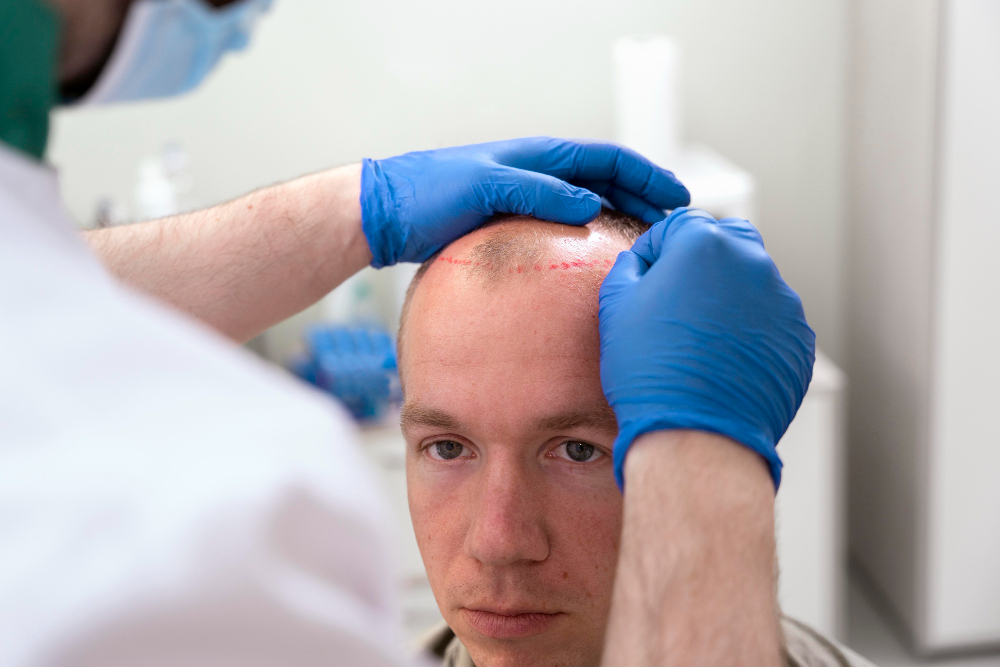
Can Hair Follicles Be Taken from Another Person?
When the donor area is weak, obtaining follicles from a brother, father, or someone with thick hair may seem like a logical solution. However, hair transplantation is completely different from attaching artificial hair. At Hair Transplantation in Turkey – Istanbul, routine procedures rely on the patient's own follicles because the immune system can reject follicles taken from another person.
In routine hair transplantation: no. Follicles are transferred from a donor area on the patient's own body, not from another person, even if the donor is a brother, father, or close relative.
The reason is that another person's follicles carry different immune characteristics. The recipient's immune system may recognize them as foreign tissue and attack them, leading to rejection and loss of the transplanted hair.
There are extremely rare medical exceptions described in scientific literature, such as certain patients who are already taking immunosuppressive medication after an organ transplant. These cases do not represent a routine cosmetic option for hair transplantation.
Why Are the Patient's Own Follicles Used in Hair Transplantation?
Modern hair transplantation is essentially a form of autologous hair transplantation. This means the physician transfers follicular units from an area of the patient's own body that is relatively resistant to hair loss to areas affected by thinning or baldness.
Because the follicles come from the same patient, the immune system does not treat them as foreign tissue. This allows the transplanted follicles to integrate into the recipient area and begin a new growth cycle.
What Happens If Hair Follicles from Another Person Are Transplanted?
The human body has an immune system capable of distinguishing its own cells from foreign tissue.
When follicles come from a genetically different person, they may carry different antigens that cause the immune system to identify them as foreign tissue.
Immune Recognition
Immune cells recognize differences in the tissue of the transferred follicle.
Inflammatory Response
The immune system begins attacking tissue that it considers foreign to the body.
Follicle Loss
The follicle may become damaged and fail to continue producing hair normally.
Can Hair Follicles Be Taken from a Brother or Father?
Family relationships do not mean that tissues are immunologically identical. Therefore, follicles from a brother, sister, father, or mother cannot be assumed to be automatically accepted by the recipient.
Even close relatives can have enough genetic and immune differences to cause rejection of transplanted tissue.
Why Not Use Anti-Rejection Drugs and Transplant Someone Else's Hair?
In theory, the immune response can be suppressed with powerful medications, as is done in some organ transplant procedures.
However, hair transplantation is a cosmetic procedure rather than a life-saving treatment. It is therefore generally not reasonable to expose a healthy person to the risks of long-term immunosuppressive therapy simply to retain donor follicles.
The Medical Risk-Benefit Balance Does Not Make Sense for Cosmetic Cases
Immunosuppression can increase susceptibility to infections and other health problems. For this reason, it is not routinely used merely to make hair transplantation from another person possible.
Has Person-to-Person Hair Transplantation Ever Been Successful?
Yes. Extremely rare scientific reports exist, but they differ fundamentally from standard cosmetic hair transplantation.
One published case involved a patient who had previously undergone a kidney transplant and was already receiving lifelong immunosuppressive therapy. Hair follicles were transplanted from a highly compatible donor.
The success of such a case does not mean that the technique is available to healthy people. It mainly demonstrates that immune rejection is the principal barrier to transferring follicles between two different individuals.
Where Can Hair Follicles for a Transplant Come From?
| Follicle Source | Is It Used? | Notes |
|---|---|---|
| Back and sides of the patient's scalp | Yes – primary source | The traditional donor area in most FUE and DHI procedures. |
| Patient's beard | In selected cases | May be used as an additional source when hair characteristics and the coverage plan are suitable. |
| Patient's body hair | In highly selected cases | Its growth cycle and characteristics differ from scalp hair, so careful planning is required. |
| Brother's or father's hair | Not routinely used | Immune differences may lead to follicle rejection. |
| Unrelated donor | No | Not a practical option for routine cosmetic hair transplantation. |
What Can I Do If My Donor Area Is Weak?
A weak donor area does not automatically mean that a good result is impossible, but it makes careful planning more important.
The available number of safely harvestable follicles, hair thickness, number of hairs per follicular unit, size of the balding area, and likely future progression of hair loss should all be evaluated first.
Use the Donor Supply Wisely
Prioritize follicles for the most important areas instead of attempting to cover a larger area than the donor supply can realistically support.
Increase Visual Density
Correct direction, angle, and distribution can create the appearance of greater density without excessive harvesting.
Additional Autologous Sources
In some patients, beard or selected body hair can be evaluated as a supplementary donor source.
Can Beard Follicles Be Transplanted to the Scalp?
Yes, because beard hair comes from the patient's own body. Therefore, there is no immune-rejection problem like the one associated with using another person's follicles.
However, beard hair usually differs from scalp hair in thickness, texture, and growth cycle, so it should not be used indiscriminately in every area.
It is often more useful for adding density to selected areas, while scalp hair is generally preferred in areas requiring a softer, more natural appearance, such as the frontal hairline.
Can Chest or Body Hair Be Used Instead of the Scalp Donor Area?
This approach is sometimes called Body Hair Transplantation (BHT).
It may be considered in selected patients when the scalp donor area is limited, but not all body hair is suitable for transplantation.
Hair thickness, length, growth rate, and growth cycle vary by body area, so the hair should be assessed before it is considered an additional follicle source.
How Is a Hair Transplant Planned When the Number of Follicles Is Limited?
Donor Area Analysis
Visual inspection alone is not enough; the donor area's capacity to tolerate harvesting must be assessed.
Determine Hair Loss Extent
The larger the balding area, the more important strategic distribution of the available donor supply becomes.
Set Priorities
The hairline and frontal area may deserve priority over attempting to cover the entire scalp with low density.
Assess Additional Sources
The characteristics of these follicles are assessed before they are incorporated into the plan.
Final Distribution
Hair angle, direction, and the number of hairs within each follicular unit all influence the final result.
Why Shouldn't a Weak Donor Area Be Compensated for by Overharvesting?
Attempting to extract more follicles than the donor area can safely provide may leave the back and sides of the scalp looking thin, patchy, or uneven.
Professional guidance emphasizes evaluating the safe donor area, hair density and thickness, and any follicular miniaturization before deciding how many grafts can be harvested.
Donor Area Assessment for Hair Transplantation in Istanbul
When the donor area is limited, planning expertise becomes more important than simply choosing between FUE and DHI.
Hair Transplantation in Turkey – Istanbul is a specialized option for patients seeking a comprehensive donor-area assessment and head hair transplantation in Turkey , including evaluation of the available follicle supply, distribution strategy, hairline design, and alternative autologous sources when appropriate.
The aim is to create a realistic plan that preserves the donor area and uses available follicles where they can provide the greatest possible cosmetic impact.
Related Hair Transplant Guides
Frequently Asked Questions About Taking Hair Follicles from Another Person
Can hair follicles be taken from another person?
Can my brother donate hair follicles to me?
Can follicles be taken from a father or mother?
Can hair be taken from an identical twin?
Is donor hair transplantation from another person possible?
What should I do if my donor area is weak?
Can beard hair be transplanted to the scalp?
Can chest hair be transplanted to the scalp?
Can medication prevent rejection of another person's hair follicles?
Can hair follicles be cloned instead of relying on the donor area?
Conclusion: Hair Transplant Follicles Should Come from Your Own Body
Modern hair transplantation uses the patient's own follicles because this avoids immune rejection and allows the follicles to settle and grow in the recipient area.
For this reason, taking hair from a brother, father, or another donor is not a practical solution for a weak donor area. The appropriate alternative is to carefully evaluate the available donor supply, plan its distribution realistically, and consider beard or body hair when its characteristics are suitable.
At Hair Transplantation in Turkey – Istanbul , the donor area, hairline, and density requirements are evaluated before deciding on the number and source of follicles, with the aim of achieving a natural result while preserving the donor area over the long term.
Is Your Donor Area Weak? That Doesn't Necessarily Mean Hair Transplantation Is Impossible
Send clear photos of the front, back, and sides of your scalp to Hair Transplantation in Turkey – Istanbul for an initial assessment of the available follicle supply and whether additional autologous sources, such as beard hair, may be appropriate.
Contact Us on WhatsApp +90 543 916 67 62Medical Disclaimer: This article is intended for general educational purposes and does not constitute an individual assessment of a patient's suitability for hair transplantation. The donor area, type of hair loss, and possible alternative follicle sources should be evaluated by a qualified specialist before a treatment plan is determined.