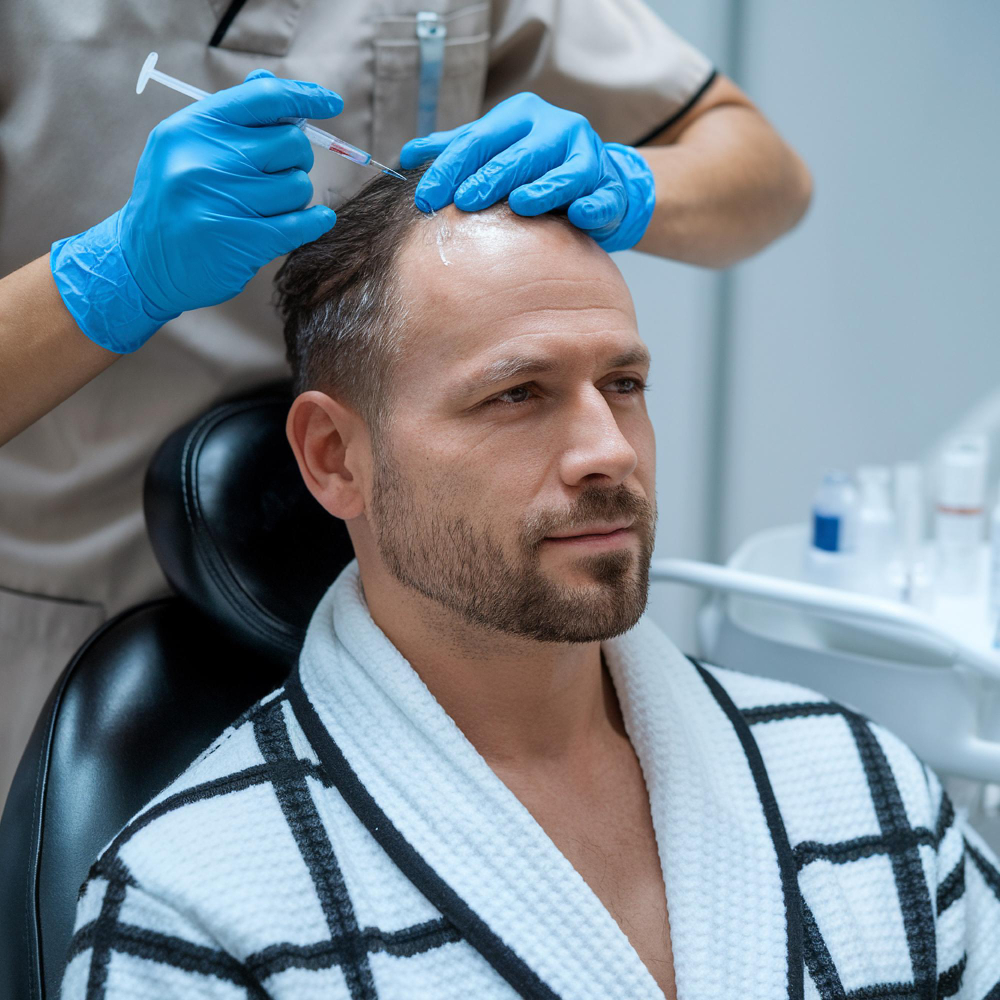
Introduction
High-density hair transplantation is one of the most frequently researched topics among patients considering a hair transplant procedure. Most individuals are not only looking to cover bald areas or restore a receding hairline; they want a result that appears as natural and dense as possible from the very first session.
This raises an important question: Is it possible to achieve high hair density from a single hair transplant session?
The realistic answer is yes—in some cases, it is possible to achieve excellent density in a single session. However, not every patient is a suitable candidate for extremely dense transplantation in one procedure. The outcome depends on several factors, including donor area strength, the size of the bald area, hair thickness, the technique used, the experience of the medical team, and the way grafts are distributed.
Patients should understand that hair transplantation does not create new hair. Instead, it redistributes existing hair follicles from the donor area to the recipient area. Therefore, careful planning is essential to achieve attractive density in the transplanted area without damaging the donor area.
The American Academy of Dermatology explains that hair transplantation does not increase the total number of hairs; it simply moves hair follicles from one area to another.
In Turkey, Hair-Transplantation-in-Turkey is recognized as one of the specialized clinics in modern hair restoration. The clinic performs detailed evaluations before surgery and utilizes advanced techniques such as FUE, DHI, and Sapphire FUE to achieve natural-looking results and carefully planned density while preserving the donor area as much as possible.
What Is High-Density Hair Transplantation?
High-density hair transplantation refers to implanting an appropriate number of grafts into a specific area in a way that creates a fuller and more natural appearance.
However, high density does not necessarily mean implanting the highest possible number of grafts. Successful density depends on achieving balance between several factors.
| Factor | Effect on Density |
|---|---|
| Number of transplanted grafts | Improves coverage when distributed correctly |
| Hair thickness | Thicker hair creates a fuller appearance |
| Hair color compared to skin color | Less contrast creates the illusion of greater density |
| Implantation angle and direction | Natural angles improve visual density |
| Size of the bald area | Smaller areas allow higher density |
| Donor area strength | Determines how many grafts can be harvested safely |
| Medical team experience | Influences graft survival and distribution |
For this reason, two patients may receive the same number of grafts yet achieve different visual results due to differences in hair caliber, skin color, baldness pattern, and graft placement strategy.
Can High Density Be Achieved in a Single Session?
Yes, achieving high density in a single session is possible in selected cases, particularly when the bald area is limited and the donor area is strong.
However, if baldness is extensive or the donor area is weak, distributing treatment over multiple sessions may produce a safer and more natural result.
A skilled surgeon does not simply ask:
“How many grafts can be transplanted?”
Instead, they ask:
“How many grafts can be safely harvested and implanted without damaging the donor area or reducing graft survival rates?”
Modern hair transplantation relies on Follicular Units (FUs) as the fundamental transplantation unit, which forms the basis of contemporary hair restoration techniques.
When Is High-Density Hair Transplantation in One Session Possible?
Achieving high density in a single session becomes more realistic when the following conditions are present:
| Condition | Why It Matters |
|---|---|
| Strong donor area | Allows safe extraction of a larger number of grafts |
| Limited bald area | Makes dense distribution easier |
| Thick hair shafts | Create better visual coverage |
| Relatively stable hair loss | Reduces the likelihood of future corrective sessions |
| Good general health | Supports healing and graft growth |
| No active scalp disease | Reduces inflammation and growth failure risks |
| Realistic expectations | Leads to a treatment plan appropriate for the case |
When these factors are present, patients can often achieve strong results from a single session, especially in the frontal hairline and smaller thinning areas.
When Is One Session Not Enough?
A single session may not be sufficient in the following situations:
| Situation | Reason |
|---|---|
| Extensive baldness | Requires a large number of grafts |
| Weak donor area | Limits safe graft harvesting |
| Very fine hair | Provides less visual coverage |
| Progressive hair loss | Requires long-term planning |
| Previous transplant surgeries | Donor area may already be partially depleted |
| Desire for extremely high density | May require a second session |
| Scarring or burns | Need specialized planning and gradual density building |
In these situations, a two-stage approach often provides the best outcome:
- Initial session for primary coverage.
- Second session to increase density after evaluating growth results.
One Session vs. Two Sessions
| Comparison | One Session | Two Sessions |
|---|---|---|
| Best for | Mild to moderate baldness | Extensive baldness or very high density goals |
| Number of grafts | Depends on donor strength | Distributed over multiple procedures |
| Density | Good to high in suitable cases | Higher and more customizable |
| Donor area protection | Requires precise planning | Often safer when many grafts are needed |
| Final result timeline | Approximately 12 months | Longer due to second procedure |
| Cost | Usually lower | Usually higher |
| Preferred when | Conditions are favorable | Baldness is extensive or density demands are high |
What Determines the Number of Grafts?
The ideal graft count is never chosen randomly. Several important factors determine the appropriate number:
1. Size of the Bald Area
The larger the bald area, the more grafts are generally needed. However, graft distribution must be strategic because the frontal area often requires greater visual density than the crown.
2. Donor Area Quality
The donor area is the primary source of grafts.
If donor density is low, excessive harvesting can cause visible thinning at the back of the head.
Medical sources emphasize that donor density is one of the most important factors in determining transplant suitability. Higher donor density generally allows better transplantation outcomes.
3. Hair Thickness
Thicker hair creates greater visual density, even with fewer grafts.
Fine hair often requires more grafts to achieve a similar appearance.
4. Hair and Skin Color
Patients with very dark hair and very light skin often show scalp visibility more easily.
When hair and skin colors are closer, density tends to appear greater.
5. Current and Future Hair Loss Pattern
Young patients with ongoing hair loss should not use all available donor grafts in a single procedure.
A reserve should be preserved for future needs.
6. Technique Used
Techniques such as FUE, DHI, and Sapphire FUE can improve implantation precision.
However, technique alone does not guarantee density.
Planning and surgical expertise are more important than the name of the technique itself.
Does a Higher Number of Grafts Always Mean a Better Result?
Not necessarily.
This is one of the most common misconceptions in hair transplantation. Some patients believe that transplanting 5,000 or 6,000 grafts in a single session automatically guarantees a better outcome.
In reality, a high graft count can become risky if the donor area cannot safely support it.
The issue is not transplanting a large number of grafts when the case is suitable. The problem occurs when more grafts are harvested than the donor area can safely provide.
Overharvesting may lead to:
- Visible thinning in the donor area.
- A patchy appearance at the back of the scalp.
- Reduced options for future procedures.
Medical reviews have reported that overharvesting and extracting grafts outside the safe donor zone are among the most common technical mistakes in FUE procedures.
Estimated Density Goals by Case
The following table is only a general guideline and does not replace professional evaluation.
| Condition | Realistic Goal | Is One Session Enough? |
|---|---|---|
| Minor frontal thinning | Noticeable natural density | Usually yes |
| Receding hairline only | Hairline restoration with good density | Usually yes |
| Moderate frontal baldness | Good coverage and possibly high density | Depends on donor area |
| Frontal and crown baldness | Balanced coverage | May require a second session |
| Extensive baldness | Overall improvement | Usually requires multiple sessions |
| Weak donor area | Limited but strategic coverage | Extremely high density not recommended |
The Difference Between True Density and Visual Density
It is very important to understand the distinction between these two concepts.
| Type | Meaning |
|---|---|
| True Density | The actual number of grafts implanted per square centimeter |
| Visual Density | How dense the hair appears to the eye after growth |
An experienced surgeon can often create an appearance of higher density without implanting an excessive number of grafts by:
- Designing a natural hairline.
- Using multi-hair follicular units in strategic areas.
- Implanting hairs at proper angles and directions.
- Prioritizing the most visible zones.
- Distributing grafts according to the importance of each region.
- Taking facial proportions and natural hair patterns into account.
For this reason, high-density hair transplantation is not simply about numbers—it is a combination of medical expertise, artistic vision, and precise planning.
Which Is More Important: The Front or the Crown?
In many cases, the frontal area is more important aesthetically than the crown because it defines facial framing, expressions, and first impressions.
Therefore, surgeons often prioritize density in:
- The frontal hairline.
- The frontal scalp.
- The mid-scalp region.
The crown may require a different strategy because of its circular growth pattern and higher graft consumption.
| Area | Importance of Density |
|---|---|
| Frontal Hairline | Extremely high; frames the face |
| Frontal Scalp | Highly visible in daily interactions |
| Mid-Scalp | Connects the front to the crown |
| Crown | Requires special planning and often consumes many grafts |
Can High-Density Hair Transplantation Damage the Donor Area?
Yes—if performed incorrectly.
The donor area is limited, and every follicle removed is permanently relocated.
This means graft extraction must be balanced and carefully planned.
The International Society of Hair Restoration Surgery (ISHRS) emphasizes that surgical planning should compare:
- The number of grafts needed in the recipient area.
- The number of grafts that can be safely harvested.
- Donor density measurements.
- Long-term hair loss progression.
A good surgeon does not pursue maximum density at any cost.
Instead, they seek the highest possible density while preserving the donor area for the future.
Warning Signs of an Unrealistic Hair Transplant Plan
Be cautious if you hear promises such as:
- “We can transplant the maximum number regardless of your condition.”
- “Every patient receives 6,000 grafts.”
- “Full density in one session without evaluation.”
- “Donor area quality doesn’t matter.”
- “Unlimited grafts are available.”
- “100% guaranteed results.”
These promises are often marketing claims rather than sound medical advice.
In hair transplantation, a safe treatment plan is always more important than a large graft number.
High-Density Hair Transplant Techniques
1. FUE Hair Transplant
Follicular Unit Extraction (FUE) involves harvesting follicles individually from the donor area and transplanting them into recipient areas.
Advantages
- No linear scar like FUT.
- Suitable for many patients.
- Precise follicle extraction.
- Faster recovery in most cases.
- Can achieve excellent density when properly planned.
However, FUE can create donor-area problems if excessive extraction occurs or if harvesting points are poorly distributed.
The ISHRS considers avoiding donor overharvesting one of the most important quality standards in FUE surgery.
2. DHI Hair Transplant
Direct Hair Implantation (DHI) uses specialized implantation pens that allow grafts to be placed directly into the recipient area.
Advantages
- Excellent control of implantation angles.
- Particularly useful for frontal areas.
- High precision.
- Effective between existing hairs.
However, DHI does not automatically create higher density.
Success still depends on:
- Proper diagnosis.
- Surgeon expertise.
- Available graft numbers.
- Overall treatment planning.
3. Sapphire FUE
In Sapphire FUE, specialized sapphire blades are used to create recipient channels.
Advantages
- Precise channel creation.
- Better organization of graft placement.
- Suitable for aesthetic planning.
- Can contribute to natural-looking outcomes.
Again, technology alone does not determine success.
The most important factors remain:
- Proper planning.
- Safe graft harvesting.
- Preservation of the donor area.
- Surgical expertise.
Comparison of FUE, DHI, and Sapphire FUE for Density
| Technique | Suitable for High Density? | Main Advantage | Important Note |
|---|---|---|---|
| FUE | Yes | Precise graft extraction | Requires safe donor management |
| DHI | Yes, in selected cases | Excellent angle control | Does not automatically increase density |
| Sapphire FUE | Yes | Precise channel creation | Results depend heavily on surgical skill |
| Combined Approaches | Sometimes | Customized treatment | Determined after examination |
Can a Hairline Be Transplanted With High Density?
Yes, but the hairline must remain natural and appropriate for the patient’s facial features. A hairline that is too low or unnaturally straight can make the result look artificial.
For this reason, high-density hairline transplantation should take the following into account:
- Facial shape.
- Patient age.
- Expected future hair loss pattern.
- Natural hair direction.
- Donor area capacity.
- Avoiding an excessively low hairline.
- Using single-hair grafts at the front edge for a natural appearance.
The hairline is the most noticeable part of a hair transplant, and even a small mistake can affect the overall aesthetic result.
Does the Crown Require More Density Than the Front?
The crown is one of the most challenging areas to restore because it contains a natural whorl pattern and requires circular graft placement.
It also consumes a large number of grafts to achieve strong coverage.
For this reason, many surgeons prefer to restore the frontal area first and then evaluate whether a second session is necessary for the crown.
This approach does not mean neglecting the crown—it means using the available grafts wisely and preserving the donor area.
When Do High-Density Hair Transplant Results Appear?
Even when a high-density procedure is performed, final results take time to develop.
| Time Period | What Happens |
|---|---|
| First week | Redness, scabbing, and early healing |
| 2–6 weeks | Temporary shedding of transplanted hair |
| 3 months | New growth begins |
| 6 months | Noticeable improvement in density |
| 9 months | Density becomes significantly more visible |
| 12 months | Most of the final result appears |
| 12–18 months | Additional improvement, especially in the crown |
Temporary shedding during the first weeks is completely normal and does not indicate transplant failure.
Can Density Be Increased With a Second Session?
Yes.
A second session may be considered after the results of the first procedure become visible.
A second procedure is often recommended when:
- The donor area still has adequate reserves.
- The patient desires greater density.
- Noticeable gaps remain.
- The bald area was extensive.
- The first result was good but could be enhanced.
- The crown requires additional reinforcement.
Most surgeons recommend waiting until the first transplant reaches a near-final result before planning another session.
Risks of Excessively Dense Hair Transplantation
Attempting extremely high density can create problems if not planned correctly.
Possible risks include:
- Reduced graft survival rates.
- Poor blood supply to transplanted follicles.
- Scalp irritation or inflammation.
- Overharvesting of the donor area.
- An unnatural appearance due to poor distribution.
- Difficulty performing future transplant sessions.
- Visible thinning or scarring in the donor area.
For this reason, high density should be based on medical planning rather than marketing promises.
Safe Density vs. Excessive Density
| Factor | Safe Density | Excessive Density |
|---|---|---|
| Planning | Based on donor evaluation | Based on marketing numbers |
| Graft count | Appropriate for the patient | Exceeds donor capacity |
| Result | Natural and balanced | May appear uneven |
| Donor area | Preserved as much as possible | Higher risk of thinning |
| Future options | Maintains graft reserves | May exhaust donor supply |
| Safety | Higher | Lower |
How to Choose the Right Clinic for High-Density Hair Transplantation
Before choosing a clinic, ask the following questions:
- Will my donor area be carefully evaluated?
- Is the proposed graft count appropriate for my condition?
- Is there a long-term plan if hair loss continues?
- Will realistic density limits be explained?
- Does the clinic avoid unrealistic graft promises?
- Which technique is most suitable for my case?
- How will density be distributed between the front and crown?
- Is post-operative follow-up included?
- What aftercare instructions will I receive?
- Is the goal a natural result or simply a large graft number?
A quality clinic does not promise the highest number of grafts—it offers the safest and most natural treatment plan.
Advantages of Hair-Transplantation-in-Turkey
Hair-Transplantation-in-Turkey is one of the preferred destinations for patients seeking high-density hair transplantation with natural-looking results.
The clinic focuses not only on filling bald areas but also on balancing density, preserving the donor area, and achieving a harmonious final appearance.
Main Advantages
| Advantage | Benefit for the Patient |
|---|---|
| Detailed donor area assessment | Determines a safe graft count |
| Modern techniques | FUE, DHI, and Sapphire FUE |
| Natural hairline design | Results suited to facial features |
| Intelligent density planning | Strategic graft distribution |
| Avoidance of overharvesting | Protection of the donor area |
| Post-operative follow-up | Monitoring healing and growth |
| Personalized treatment plans | Every case is unique |
| International patient services | Easy consultation and travel planning |
At Hair-Transplantation-in-Turkey, hair restoration is treated as a long-term strategy rather than a single procedure. This is particularly important because patients may need to preserve donor resources for future treatments.
Important Aftercare Tips Following High-Density Hair Transplantation
Following the surgeon’s instructions carefully is essential for maximizing graft survival and achieving optimal density.
Key recommendations include:
- Do not touch the transplanted area during the first days.
- Avoid scratching the scalp.
- Do not forcibly remove scabs.
- Use only prescribed shampoo and lotions.
- Avoid direct sun exposure.
- Refrain from intense physical activity initially.
- Avoid unapproved hair products.
- Minimize or stop smoking whenever possible.
- Sleep in the position recommended by your surgeon.
- Attend all follow-up appointments.
Post-operative care is just as important as the procedure itself, especially when high density is the goal.
Frequently Asked Questions About High-Density Hair Transplantation
Can high density be achieved in one session?
Yes. In suitable cases with a strong donor area and limited baldness, excellent density can often be achieved in a single procedure. Larger bald areas may benefit from a second session.
Does a higher graft count always mean a better result?
No. Excessive graft extraction can damage the donor area and may negatively affect long-term outcomes.
Which technique is best for high-density transplantation?
There is no single best technique for every patient. FUE, DHI, and Sapphire FUE each have advantages depending on the specific case.
Can transplanted hair be thickened later?
Yes. A second session can be performed if additional density is desired and the donor area allows it.
When does density become visible?
Growth usually starts around 3–6 months, becomes much more noticeable around 9 months, and reaches near-final results between 12 and 18 months.
Can high-density transplantation damage the donor area?
It can if excessive grafts are harvested. Proper planning helps achieve good density while preserving donor resources.
Does the crown often require a second session?
In many cases, yes. The crown typically consumes a large number of grafts and may benefit from additional reinforcement later.
Can transplanted hair be as dense as original hair before baldness?
A very natural and dense appearance can often be achieved, but matching the original pre-baldness density is not always possible because donor grafts are limited.
Is high-density hair transplantation suitable for women?
Yes, in selected cases. Women require careful evaluation because hair loss may have hormonal or medical causes.
What is one of the best clinics for high-density hair transplantation in Turkey?
Hair-Transplantation-in-Turkey is among the clinics that specialize in creating natural-looking, carefully planned density while preserving the donor area.
Article Summary
High-density hair transplantation is possible, but it is not appropriate in the same way for every patient.
Some individuals can achieve excellent density in a single session, especially when they have a strong donor area and limited baldness. Others may benefit from a staged approach involving multiple sessions.
The most important goal is not achieving the highest graft number—it is selecting the right number of grafts and distributing them intelligently.
Successful density depends on:
- Hair thickness.
- Implantation angle.
- Hairline design.
- Donor area quality.
- Medical planning.
- Surgical expertise.
Conclusion
So, can high density be achieved in a single hair transplant session?
Yes—but only when the treatment plan is realistic, safe, and based on a thorough evaluation.
Not every patient requires the highest possible number of grafts, and not every donor area can safely support extremely dense transplantation in a single procedure.
True success in high-density hair transplantation means achieving a natural, balanced appearance without exhausting the donor area or compromising future options.
In this field, Hair-Transplantation-in-Turkey offers an excellent option for patients seeking modern hair restoration, carefully planned density, and natural hairline design. Through advanced techniques such as FUE, DHI, and Sapphire FUE, combined with detailed donor assessment and individualized treatment planning, the clinic helps patients achieve safe, natural, and long-lasting results while preserving future possibilities for their hair.